How to Trade Meme Coins Without Losing Your Capital to Emotions and Rugs
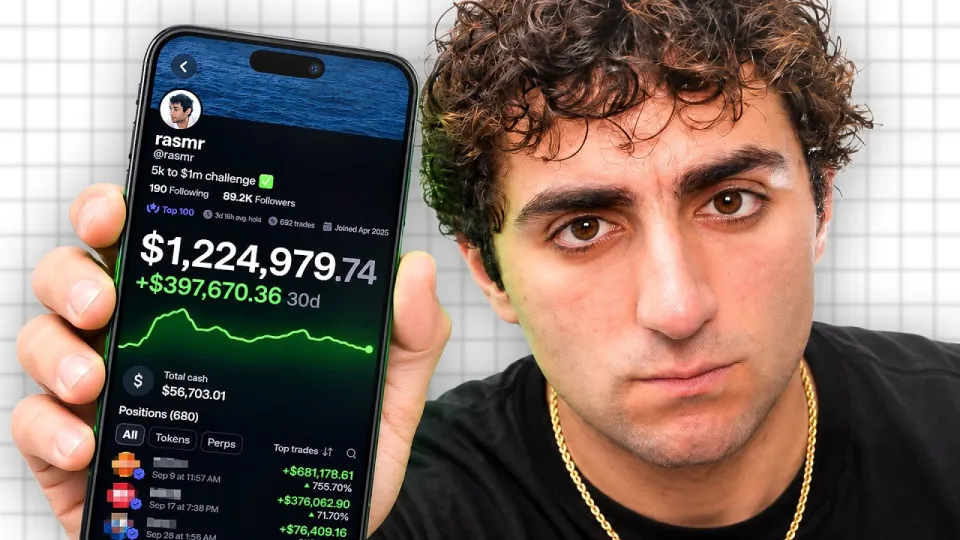
Video: 5 Years of Memecoin Knowledge in 12 Minutes
Need articles like this for your video? They help promote it on YouTube and Google — order them in the Telegram bot @sat_sit_bot. It writes articles around your video, embeds the video and publishes them on popular niche websites (no ads). Your first 50 articles are free.
Meme coins are tokens whose value rests entirely on attention, narrative and liquidity rather than revenue or cash flow, so the only reliable way to trade them is to decide your exit before you enter and to size every position so a total loss is survivable. Treat the chart as a crowd psychology readout, not as a fundamental signal, and let market cap — not the token price — tell you where you are in the cycle.
The breakdown below follows the framework rasmr lays out in the 12-minute retrospective "5 Years of Memecoin Knowledge in 12 Minutes", and you can open a trading account through the fomo.family registration link if you want to follow the setups in real time.
What actually moves a meme coin price
A meme coin has no earnings, no treasury and usually no product, so price is a function of new money entering faster than existing holders leave. That makes three variables dominant: the narrative the token rides, the credibility of the people behind the launch, and the depth of liquidity on the pair. When any one of them breaks, the move reverses faster than it built.
Narrative is the reason a token gets discovered at all — a cultural moment, a mascot, a political event, an inside joke that spreads on its own. The launch source matters just as much: a token announced quietly inside a connected group before public launch has a very different holder base than one that appears on a launchpad with no backers. This is the practical meaning of the "cabal" idea viewers keep asking about — not a conspiracy, but a circle of early participants who consistently get positioning before the crowd, which is exactly why late buyers inherit their exit liquidity.
How to size and plan a meme coin position
Position sizing is the single decision that determines whether a bad streak ends your trading or just dents it. Meme coins can go to zero, so the correct mental model is that every position is already lost and you are buying a lottery ticket with defined odds.
- Decide the maximum you can lose on the trade and treat that number as the full position — not as a stop level you might move later.
- Split entries: take a starter position, add only if the thesis strengthens, and never add simply because the price fell.
- Write the exit ladder before buying — for example sell a third at 2x, a third at 4x, and let the remainder run with a trailing stop.
- Set the invalidation point in market cap terms, not in token price, and honor it without renegotiating.
- Log the entry reason, the narrative, the launch source and the outcome in a journal so patterns become visible across dozens of trades.
Why market cap beats token price
Token price is a distraction because supply differs wildly between coins — a token at $0.0001 with a huge supply can be a larger asset than one at $4 with a tiny float. Market cap tells you how much money has already been committed, and therefore how much fresh capital is needed to double it.
A token at a few million dollars of capitalization can multiply quickly on modest inflows; the same token at several hundred million needs institutional-scale buying to move. Experienced traders map out the typical zones where early holders start distributing — often well before the numbers newcomers imagine — and they size their own exits just under those zones rather than hoping for a round number.
The emotional mistakes that erase gains
The most expensive meme coin losses are not bad picks, they are good picks held too long. Two behaviors account for most of the damage reported by traders in their first months: watching a position go up 50–100% and refusing to sell, then riding it back to entry, and refusing to accept a loss so the position gets averaged down until it is unmanageable.
Greed and hope are the same error in different directions — both replace a written plan with a feeling about the chart. The fix is mechanical: pre-committed sell levels, a hard rule against adding to losers, and a mandatory pause before any trade made in reaction to a green candle. Traders who survive their first year are rarely the ones with the best calls; they are the ones who sold into strength when the plan said so.
Common questions traders ask before their first buy
Newcomers tend to ask the same handful of things, and the answers are more practical than technical. The recurring themes are how to spot a rug before it happens, whether a themed coin tied to a cultural event is a good investment, and how much capital is enough to start.
On rugs, the warning signs are structural rather than chart-based: concentrated holder distribution, liquidity that can be pulled by a single wallet, a team that is anonymous with no track record, and a launch that only reached you after the move already happened. On novelty-themed coins tied to games or events, the narrative is real but the window is short — these are trades, not holdings, and they should be sized accordingly. On capital, starting small is not a limitation, it is the correct way to pay tuition while the journal fills up.
Useful links
Final thoughts
The meme coin market rewards preparation and punishes improvisation, so build the plan — narrative check, launch source, position size, market cap targets, sell ladder — before the money is on the table. Emotions are not a personality flaw to fix later; they are a variable to design out of the process with rules and a journal. rasmr's retrospective is a useful condensed version of that discipline, and the channel is worth following for the ongoing trade breakdowns. If you want to put the framework to work, start with a small position through the fomo.family sign-up link and keep the first months boring.
Key takeaways
- Meme coins are narrative-driven tokens with no cash flow; price is set purely by attention and liquidity, so exits must be planned before entry.
- Most retail losses come from two behaviors: round-tripping unrealized gains and averaging down on a losing position out of hope.
- Market cap, not price per token, is the reference point for judging upside — a $5M cap and a $500M cap are different games.
- Who launched the token and which narrative it rides matter more than the chart pattern in the first hours of trading.
- A trading journal and fixed sell ladder remove the emotional decisions that wipe out first-month traders.
Source: 5 Years of Memecoin Knowledge in 12 Minutes · Markdown version
Questions & answers
How do I know when to sell a meme coin?
Set the exit ladder before you buy, based on market cap rather than token price. Early holders typically begin distributing well before the round numbers newcomers expect, so selling part of the position into strength at pre-defined multiples protects the gains you already have.
What are the main signs a meme coin will rug?
Look at structure, not the chart: heavily concentrated holder distribution, liquidity controlled by one wallet, an anonymous team with no history, and a launch you only heard about after the price already moved. If any of those are present, treat the trade as expendable capital.
Is it worth buying a coin themed around a game or cultural event?
The narrative can be genuinely strong, but the window is usually short because attention moves on. Treat these as trades with a defined exit rather than long-term holdings, and size them like any other speculative position.
How much capital do I need to start trading meme coins?
Starting small is the right approach regardless of budget, because the first months are tuition. Size each position so a total loss does not affect your ability to keep trading, and record every trade in a journal so the lessons compound.